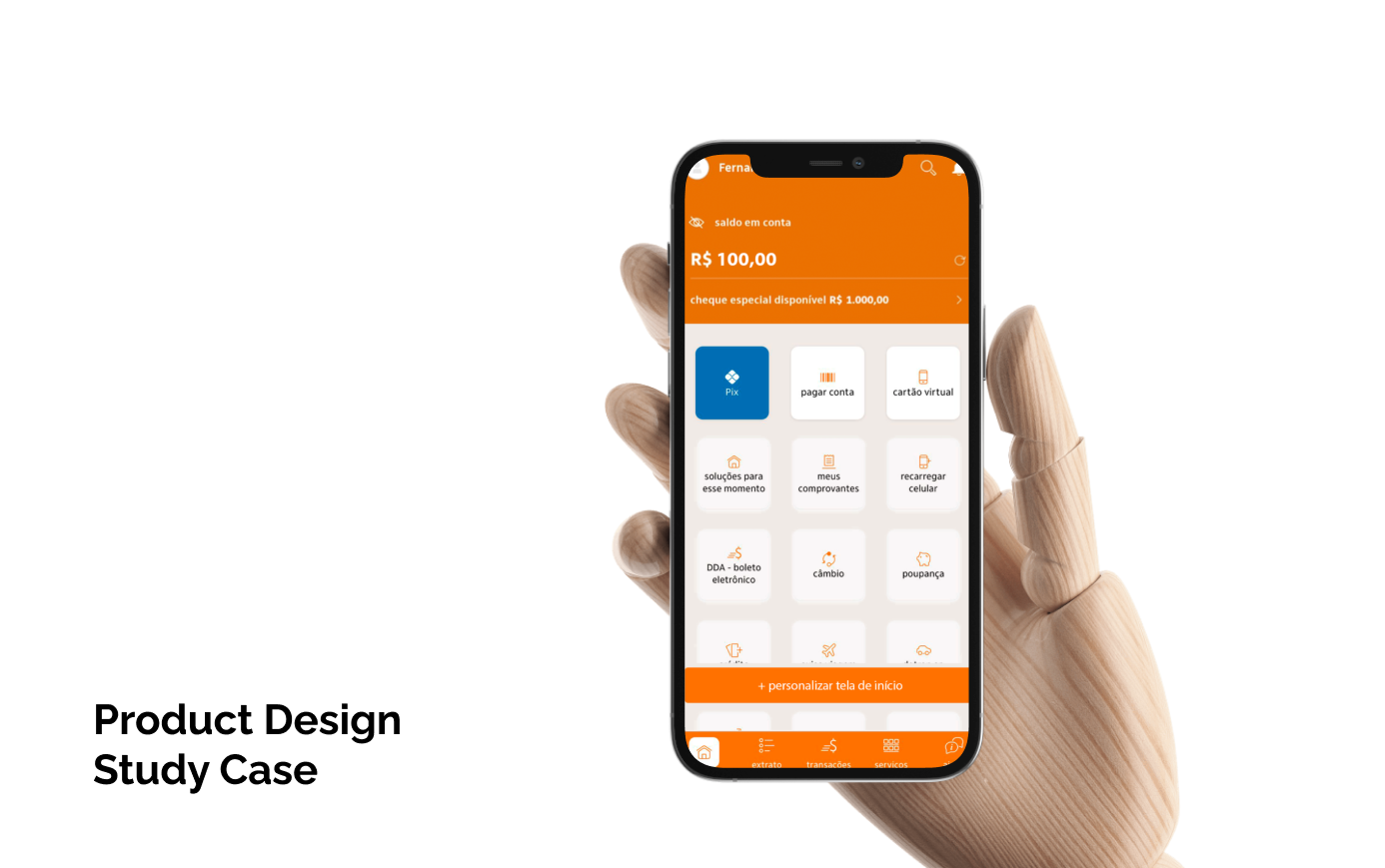
This product design case was developed during a Product Design bootcamp, based on the analysis of real customer feedback collected from complaint platforms and app store reviews. The goal was to identify usability issues within Banco Itaú's digital experience and propose a high-impact, feasible improvement.
Project Goal
Identify usability issues within Banco Itaú's digital experience and propose a high-impact, feasible improvement — starting with the home screen organization.
Research
Problem Discovery
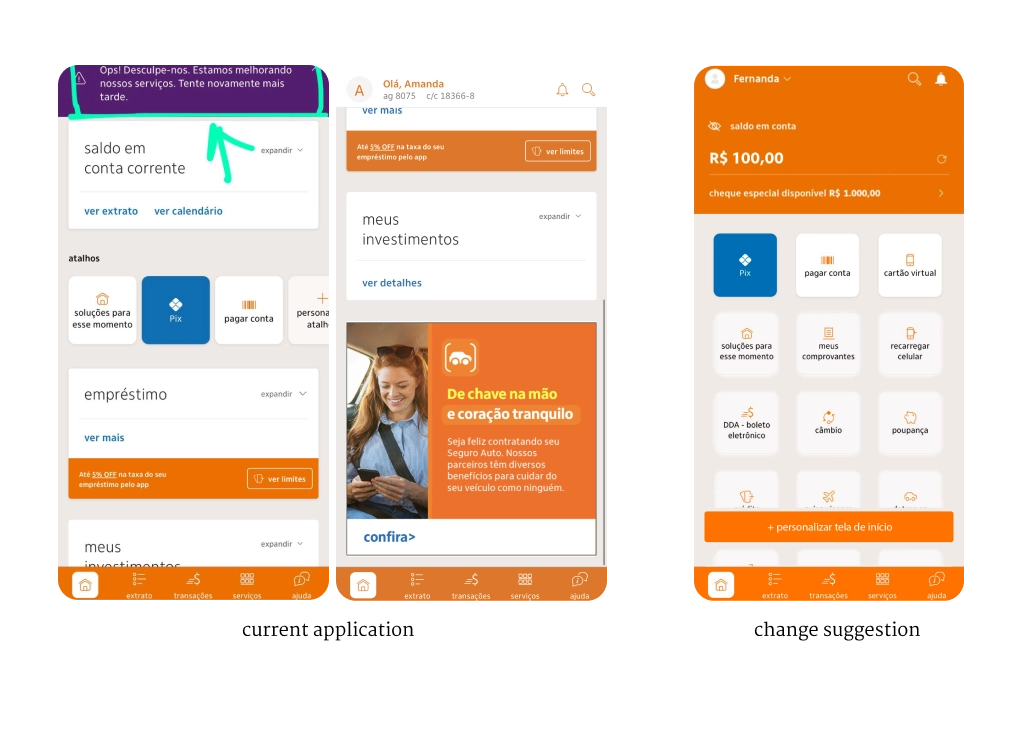
Multiple user complaints revealed friction across the banking experience, including service delays, high fees, and fragmented apps. Within the mobile app, a recurring issue stood out: the home screen organization. The existing home prioritized loans and investments, while frequently used services and shortcuts were hidden or required additional navigation.
Prioritization Matrix
Customer complaints were analyzed and grouped using an affinity diagram. Issues were evaluated through a prioritization matrix, balancing user impact and implementation effort. The home screen organization emerged as a low-effort, high-impact opportunity.
Solution
A redesigned home screen was proposed with customizable highlighted shortcuts based on user preferences, core services distributed more evenly across the screen, and a reduced need for scrolling and hidden navigation. The solution aimed to improve clarity, accessibility, and speed in everyday interactions.
Wireframes
Mid-fidelity wireframes exploring the new home screen architecture and a simplified navigation structure.
Prototype
A high-fidelity prototype using Itaú's existing design language, demonstrating the new home, balance reveal interaction, and quick-action customization.
Next Steps
Extend the redesign to the transactions and investments sections, and conduct user testing with actual Itaú customers. Learnings: Small structural changes can have a significant impact on perceived usability. Prioritization frameworks help focus design efforts on realistic, high-value improvements. Designing for financial products requires balancing business priorities with everyday user needs.